What to Wear & What to Bring for a Glacier Hike from Skaftafell
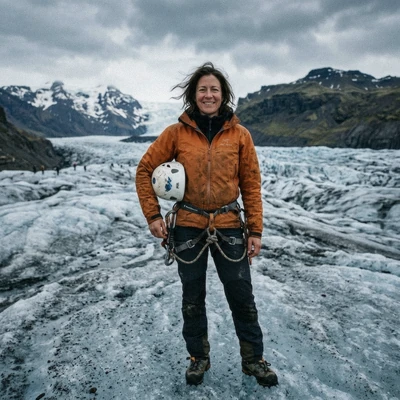
What to wear, glacier hike Iceland edition, comes down to three layers and one non-negotiable pair of boots, and every guided route out of the Öræfi valley issues the crampons, helmet and ice axe so your own packing list stays short. I check gear at the meeting hut every morning of the season, and the travelers who get turned away almost always made the same two mistakes: jeans and sneakers. This guide covers exactly what to wear, what to bring, what the six tours provide, and what to leave at the guesthouse.
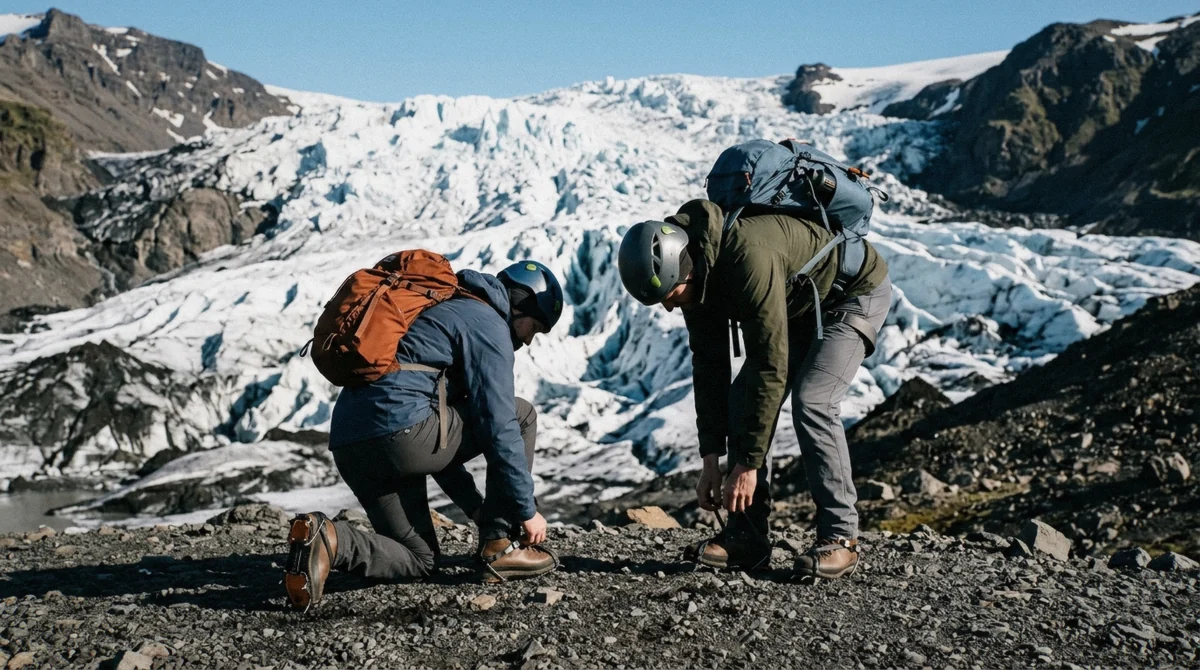
Quick answer
Wear a three-layer system, base, mid, waterproof shell, and sturdy ankle-support boots; every Skaftafell tour issues crampons, helmet and an ice axe, so your own list stays short. Jeans and sneakers are refused at the gear check on every route.
Key takeaways
- All six tours provide crampons, helmet and ice axe; harnesses come out on the steeper routes
- You bring the layers and the boots; ankle-support boots are mandatory for crampons to strap on
- Jeans and sneakers are refused at check-in, no exceptions
- July averages 11.6°C at the nearest station; standing on the ice with katabatic wind feels colder
- Boot rental exists on the Glacier Explorer; waterproof outer layers rent on the Glacier XTreme
- Crampons cannot be fitted below roughly EU size 34-35
What to Wear
Base Layer
Start with merino wool or a synthetic base layer against your skin, top and bottom. Cotton is the single most common mistake I see at the hut: a cotton t-shirt soaks through with sweat on the walk in, then sits wet against your skin once you're standing still on the ice, pulling heat away far faster than the air temperature alone would suggest. Merino and synthetic fabrics wick that moisture and dry against your body instead of holding it.
Fit should be snug but not tight, since you need room for the mid layer over it.
Mid Layer
A fleece or wool mid layer goes over the base. This is the layer you add or shed as the walk in warms you up and the wind on the ice cools you back down, so pack something you can stuff into a small backpack rather than tie around your waist. On the longer routes, the Glacier XTreme and the two six-hour tours, I tell people to bring a slightly heavier mid layer than they think they need.
You spend more time standing still, roping up or waiting for the group to regroup at a moulin, than you do on a straight walking trail.
Waterproof Shell
A waterproof, windproof outer shell is not optional in any month here. This coast sees roughly 1,600 mm of precipitation a year, and even on a dry-looking morning the wind coming off Falljökull carries enough spray and mist to soak an unprotected mid layer within an hour. Waterproof trousers matter as much as the jacket, especially on the winter departures that often reach small ice tunnels, where you're kneeling on wet ice more than you'd expect.
Footwear
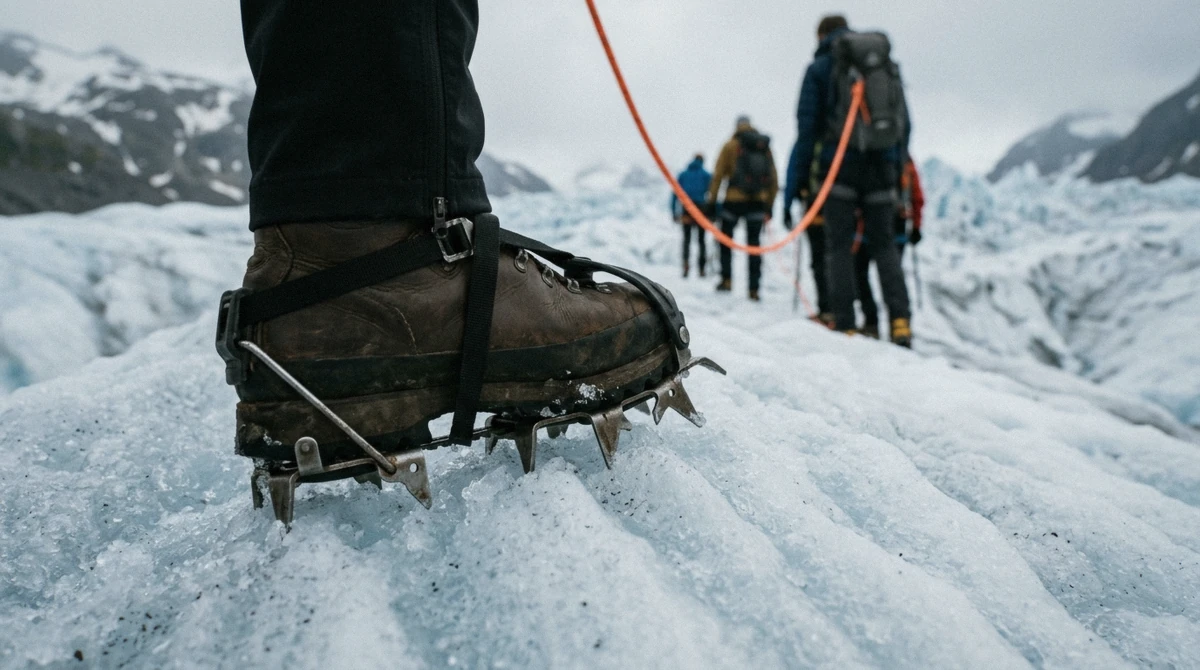
Sturdy, waterproof boots with ankle support and a stiff sole are required on every route leaving Skaftafell, because that stiffness is what lets crampons strap on securely. Low-cut hiking shoes, running shoes and any sneaker get refused at the gear check, and so do jeans, which is the other line I repeat every single morning. If you don't own boots that fit the bill, the $166 Glacier Explorer rents ankle-support boots on site, so you don't need to buy a pair for one hike.
One more limit worth knowing before you book: crampons cannot be fitted below roughly EU size 34-35, which mostly matters for younger kids and is explained fully on our with-kids guide.
What to Bring
Beyond the layers and boots, and past what the tours themselves hand out at the meeting hut, here's the short list of things worth carrying yourself. None of it is specialist gear, and most of it fits into a daypack no bigger than what you'd take on a long day walk anywhere else:
- Sunglasses, glare off the ice is strong even under cloud
- Sunscreen, UV reflects off the surface year round
- Thin liner gloves, for gripping the walking axe and any rope sections
- A warmer outer glove, worth adding November through March
- A small backpack, big enough for water, snacks and a spare layer
- Water bottle, there's no resupply once you're on the ice
- A packed lunch, mandatory if you're on the Long Adventure route
- A buff or neck gaiter, cuts wind chill on the exposed icefall sections
- A hat that covers your ears, heat loss through your head is real on a windy ridge
- A dry bag or waterproof phone pouch, for photos without the soaking risk
Gloves surprise people most. Even in July, you're gripping a metal walking axe and sometimes a fixed rope on the steeper icefall sections, and bare hands on cold metal for four hours gets uncomfortable fast. A thin liner pair is enough in summer; add a warmer outer pair once the season turns.
I keep a spare set of liner gloves in my own pack every single shift, since a wet glove on a windy ridge is worse than no glove at all, and clients rarely think to pack a backup. If you're eyeing the dedicated ice climbing day, pack the spare pair without fail, since rope work soaks gloves faster than walking ever does.
What Skaftafell Tours Provide
Read-out: crampons, helmet and an ice axe come with every one of the six tours on our Skaftafell glacier hike comparison, so that part of your list is already handled. Harnesses and ropes appear on the routes that spend real time on the steeper icefall. What varies is footwear and outer layers, and that's where the Notes column matters most before you pack.
| Item | Provided | Bring your own | Notes |
|---|---|---|---|
| Crampons | Yes, all six tours | - | Fitted to your boots at the meeting hut |
| Helmet | Yes, all six tours | - | - |
| Ice axe | Yes, all six tours | - | Walking axe, not a technical tool, except on the ice-climbing day |
| Harness and rope | Explorer, XTreme, half-day, Beyond the Limit | - | Used on the steeper Falljökull icefall sections |
| Ice-climbing boots | XTreme only | - | The 7.5-hour XTreme includes climbing boots, so no specialist footwear needed |
| Ankle-support boots | Rental available | Bring your own if you have them | Rents on the $166 Glacier Explorer |
| Waterproof outer layers | Paid rental on one route | Bring your own on the other five | Rental available on the Glacier XTreme |
| Base and mid layers | No | Always bring your own | - |
| Gloves | No | Always bring your own | Needed for the axe and any rope sections |
| Sunglasses and sunscreen | No | Always bring your own | Glare off the ice is real even under cloud |
| Packed lunch | Not included | Bring your own | Required on the Long Adventure, which stops for lunch at a high point |
| Transport to the ice | Yes, all six tours | - | 4x4 bus or short walk in, times vary by route |
What NOT to Wear or Bring
A short list of what gets turned away or genuinely doesn't belong on the ice:
- Jeans, they don't dry and go rigid and cold once wet, and every guide here refuses them at the hut
- Sneakers or low-cut shoes, no ankle support means crampons can't be strapped on safely
- Cotton of any kind as a base layer, it holds moisture and pulls heat from your skin
- Sandals or open shoes, obviously, but travelers still show up in them each season
- Heavy perfume or scented lotion, it draws no wildlife here but it's an unnecessary weight in a small pack
- A full-size tripod for casual photos, the icefall terrain is uneven enough without extra gear to manage
The jeans-and-sneakers pair is the one I turn people away for most often, and it's avoidable with a few minutes of planning before you leave your guesthouse. If in doubt about your footwear, ask when you book. The Glacier Explorer's boot rental exists precisely for travelers who packed light and didn't bring hiking boots to Iceland.
I'd rather spend two minutes fitting a rental pair at the hut than send someone back to their car disappointed, but the rental has limited sizes, so booking it ahead beats hoping one is left on a busy July morning.
Packing by Season at Skaftafell
June through September: The Easiest Window
This is the mildest packing list of the year. Kirkjubæjarklaustur, the nearest long-record station, averages 11.6°C in July with highs near 14.9°C and lows around 8.2°C, so a standard three-layer system plus a light hat covers most days. Wind off the icefall still makes a warm mid layer worth carrying even on a sunny forecast, and sunglasses matter more than people expect since the low midsummer sun bounces hard off the ice.
November through March: Colder, Bluer, Shorter Days
January averages around 0°C at the same station, with highs near 2°C and lows around -3°C, and standing still on the ice adds a real edge from katabatic wind coming off the ice cap. A warmer outer glove earns its place in your bag now, along with waterproof trousers if you're on one of the routes that reaches ice tunnels. Daylight runs short, so tours book earlier departure slots, and it's worth checking our guide to the best time for a Skaftafell glacier hike before you plan your trip around a specific month.
Whatever the season, one more clause worth a mention: travelers on the $97 beginner walk meet at the Jökulsárlón car park rather than Skaftafell itself, which changes nothing about what to wear but does change your morning logistics. Our mistakes to avoid guide covers that meeting-point trap in full.
Frequently Asked Questions
Can I wear jeans on a Skaftafell glacier hike?
No. Jeans don't dry once wet and go stiff and cold against your skin, and every guide here turns travelers away for them at the gear check. Quick-dry trousers over a base layer are the standard fix.
Can I wear sneakers instead of hiking boots?
No. Crampons need a stiff sole and ankle support to strap on securely, and sneakers don't provide either. Sturdy waterproof hiking boots are required, and the Glacier Explorer rents them if you don't own a pair.
Does any Skaftafell tour rent boots?
Yes, the $166 Glacier Explorer rents ankle-support boots on site. Waterproof outer layers are also a paid rental on the Glacier XTreme, and ice-climbing boots come included with that route so no specialist footwear is needed.
Do I need gloves in July?
Yes. You're gripping a metal walking axe and sometimes a fixed rope on the steeper icefall sections, and a thin liner glove makes that comfortable even in summer. Add a warmer outer pair from November through March.
Can I bring my camera on a glacier hike?
Yes, a standard camera or phone in a dry bag is fine on every route. Keep hands free for the axe on steeper sections, and a wrist strap is worth adding since a dropped camera on ice is gone for good.
What size boots do I need for crampons to fit?
Crampons cannot be fitted safely below roughly EU size 34-35, per the operators' own gear guidance. Our with-kids guide covers what that floor means for younger children specifically.
Do I need waterproof trousers, not just a jacket?
Yes, especially on the winter departures that often reach small ice tunnels, where kneeling on wet ice soaks through ordinary trousers fast. A full waterproof shell, top and bottom, is the standard here given roughly 1,600 mm of rain a year on this coast.
Pack the three layers, wear real boots, and let the operator handle the rest. Every tour leaving Skaftafell issues crampons, a helmet and an ice axe, which covers the gear that actually matters on the ice. The list left on you is short: base, mid, waterproof shell, sturdy boots, gloves, sunglasses.
Get that right and the gear check at the hut is a formality, not a scramble.