Best Time of Year for a Glacier Hike at Skaftafell: Month-by-Month
The best time glacier hiking Iceland can offer depends on what you're after: June through September brings the longest days and mildest weather, the easiest window for a first hike, while November through March gives the bluest ice and, on some routes, small ice tunnels. Tours run year round from Skaftafell, and there's genuinely no bad month here, only a different version of the same walk. This guide breaks the year down by season, temperature and ice colour, and tells you honestly which month suits which traveler.
Quick answer
June through September is the easiest window for a Skaftafell glacier hike, with the longest days and mildest weather. November through March trades some of that ease for the bluest ice of the year and, on some routes, small ice tunnels.
Key takeaways
- Summer (June-September) means long daylight, milder weather, and the busiest car park
- Winter (November-March) means shorter days, colder standing temperatures, and bluer ice
- Daylight swings from about 21+ hours near the June solstice to about 4-5 hours in late December
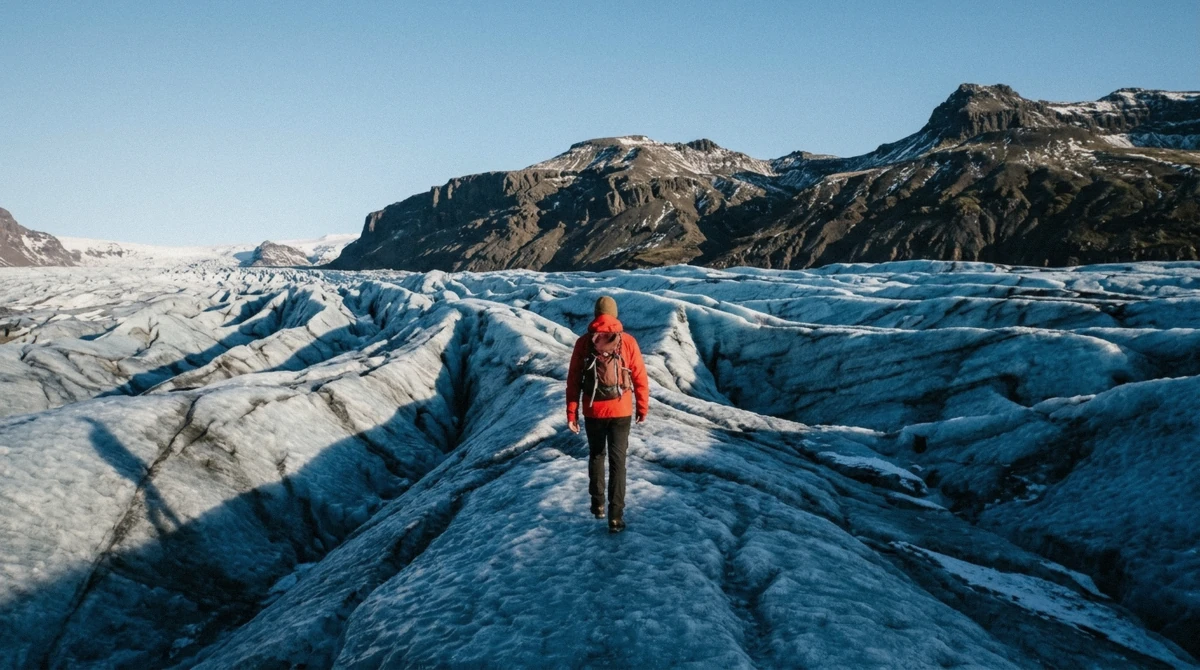
- Summer ice often reads grey rather than blue, ash and dust melt out on the surface
- Wind, not rain, cancels a departure; guides make the go/no-go call
- May and September are the honest shoulder-season picks: fewer crowds, still-workable daylight
Seasons at a Glance
A quick read on how each season compares before the month-by-month detail below:
| Season | Weather | Ice conditions | Crowds | Verdict |
|---|---|---|---|---|
| June-August | Mild, typical highs near 15°C, long daylight | Grey-white surface, ash bands, deep blue only inside crevasses | Busiest, car park fills by mid-morning | Easiest window, best for first-timers |
| September-October | Cooling, typical highs near 9-11°C, daylight shortening fast | Ash starting to bury under early snow, ice greying to blue | Moderate, thinning after early September | Good value shoulder window |
| November-March | Cold, typical highs near 0-3°C, short daylight | Bluest ice of the year; some routes reach small ice tunnels | Quietest, but daylight compresses the schedule | Best for blue ice, plan around short days |
| April-May | Mild and lengthening, typical highs near 6-9°C | Fresh snow still masking last summer's ash | Thin, before the summer rush | Honest shoulder pick, still-blue ice with longer days |
Every route here runs most of the year; the difference between seasons is really about crowds, daylight and what colour the ice looks under your boots, not whether a tour is available at all.
Summer (June to August): Long Days, Grey Ice, Full Car Park
Summer is the easiest window to plan around. Daylight runs long enough that departure time barely matters, temperatures at Kirkjubæjarklaustur, the nearest long-record station, average around 11.6°C in July with highs near 14.9°C and lows near 8.2°C, and the walk in from the meeting point stays straightforward underfoot. The honest trade-off is crowds: the Skaftafell car park and campsite fill through July and August, and the 7.5-hour Glacier XTreme is best run in this window specifically for the long daylight its full program needs.
Book ahead for weekend slots, since the small-capped groups (XTreme max 6 per guide) sell out days ahead in peak summer. What that full ice-climbing program involves is covered in our ice climbing guide.
- Typical July highs near 15°C, lows near 8°C
- Longest daylight of the year, departure timing barely matters
- Busiest car park and campsite of the season
- Best window for the full 7.5-hour XTreme program
Autumn (September to October): The Value Shoulder
September trades a few degrees of warmth for noticeably thinner crowds, and daylight still runs to roughly 13 hours in mid-September, plenty for any of the six routes. Temperatures cool steadily through October, and early snow starts settling over the summer's ash-darkened ice, nudging its colour back toward blue before winter properly sets in. This is a genuinely good window for travelers who'd rather skip the July queue at the car park without giving up much daylight.
The winter-friendly half-day route starts to see its first ice-tunnel departures late in this window if an early cold snap arrives.
- Typical September highs near 11°C, cooling toward October
- Daylight around 13 hours in mid-September
- Noticeably thinner crowds than July-August
- Ice starts greying back toward blue as ash gets buried under early snow
Winter (November to March): Bluest Ice, Shortest Days
January averages around 0°C at the same station, with highs near 2°C and lows near -3°C, and standing on the ice with wind off the ice cap adds a real edge beyond those numbers. What you get in return is the bluest ice of the year, fresh snow and consistent cold restore the colour that summer's ash dulls, and winter departures on the half-day and Beyond the Limit routes often reach small ice tunnels when conditions allow. Daylight is the real constraint: it drops to about 4-5 hours in late December, so tours run compressed, earlier schedules, and it's worth building slack into your day around the drive itself.
Pack for standing cold rather than walking cold; the what to wear guide covers the winter additions.
- Typical January highs near 2°C, lows near -3°C
- Daylight down to about 4-5 hours in late December
- The bluest, clearest ice of the year
- Quietest car park of the season, but book around shorter daylight windows
Spring (April to May): The Other Honest Shoulder
Spring mirrors autumn in appeal: daylight is lengthening fast, running past 16 hours by May, temperatures are mild without being crowded, and last winter's snow is often still masking the ash that will darken the ice again by midsummer. It's a genuinely good pick for travelers chasing blue ice without winter's short days. The half-day route runs reliably through this window at a steady, moderate pace, good value before the summer price and crowd pressure sets in.
- Typical May highs near 9°C, daylight past 16 hours
- Ice often still shows winter blue before summer ash returns
- Thin crowds ahead of the summer rush
- Good value booking window before peak pricing
Month-by-Month Temperatures and Ice Colour
Figures below are typical values built from Kirkjubæjarklaustur station normals and grouped seasonal averages; check the forecast close to your travel dates for the exact week.
| Month | High °C | Low °C | Daylight | Ice Colour |
|---|---|---|---|---|
| January | 2 | -3 | ~5 hours | Blue |
| February | 3 | -3 | ~8 hours | Blue |
| March | 4 | -1 | ~11 hours | Blue, greying late month |
| April | 7 | 1 | ~14 hours | Blue, some ash returning |
| May | 9 | 3 | ~17 hours | Mostly blue, ash building |
| June | 13 | 6 | ~21 hours | Grey-white, blue in crevasses |
| July | 14.9 | 8.2 | ~19 hours | Grey-white, ash-banded |
| August | 13 | 7 | ~16 hours | Grey-white, ash-banded |
| September | 11 | 5 | ~13 hours | Greying back toward blue |
| October | 8 | 2 | ~10 hours | Blue returning |
| November | 5 | 0 | ~7 hours | Blue |
| December | 3 | -2 | ~4-5 hours | Blue |
July is the warmest month by the station's own numbers, January the coldest, and December the shortest on daylight. Roughly 1,644 mm of precipitation falls across the year, so a waterproof shell earns its place in every month, not just the wet-looking ones. The full guide to the Skaftafell glacier hike charts daylight against departure times on the homepage infographic.
What Actually Affects Conditions
Most visitors assume rain is what changes a Skaftafell glacier day. It isn't. Wind, not rain, cancels departures, light rain is routine here and tours run through it, but guides call off a route when wind on the exposed icefall crosses the point where it's genuinely unsafe underfoot. The counterintuitive fact competitors bury: summer ice often reads grey-black rather than blue, because windborne ash and volcanic dust melt out onto the surface and darken it through the warm months. Fresh winter snow and sustained cold bury that ash and restore the blue you see in photos, which is exactly why winter, not summer, is the season for the bluest ice here. Booking July for blue-ice photos is mistake #7 on our list. Meltwater also opens moulins wider through the summer melt season, one more reason guides re-cut the day's route rather than reuse last week's line.
The sand flats west of Skaftafell add one more wrinkle in winter: the road itself gets wind closures on the worst days, separate from any decision about the hike itself, so a cancelled drive in isn't always the same thing as a cancelled tour.
The Skaftafellsstofa visitor centre stays open year round and tracks the season: 9-19 June through August, 9-18 in September and October, 9-17 March through May and in November, and 10-17 December through February. Parking at the same car park is 1,110 ISK per standard car, valid to midnight; the fee mechanics and the Jökulsárlón discount have their own section in the mistakes guide.
Best Time of Day
Morning departures beat the afternoon on two counts: you're ahead of the coach groups that fill the car park by mid-morning in peak summer, and the ice surface is firmer before the day's melt softens it. That firmness matters more than people expect, footing is more secure and crampons bite better on a cold morning surface than on the same ice by 3pm on a warm July afternoon. If you have a choice of departure slot, take the earliest one on offer, especially on the 7.5-hour XTreme where a full day's program benefits from starting on firm morning ice.
Winter Extras Without an Ice-Cave Detour
Winter departures on the half-day route and Beyond the Limit often reach small ice tunnels when conditions allow, a genuine bonus of the colder months rather than something you need to plan separately. That's a different experience from a dedicated ice-cave tour, which is its own specialty elsewhere in the region and outside what this guide covers. If a full ice-cave day is what you're after rather than the small tunnels a winter glacier hike sometimes reaches, that's worth researching as its own trip; this guide stays focused on what a Skaftafell glacier hike itself delivers season to season.
The wider ice cap and its three access points are covered in our Vatnajökull glacier hike guide. Either way, book the hike itself for the ice and terrain, and treat any tunnel as a bonus of the season rather than a guarantee, since access depends on conditions changing week to week.
So, When Should You Go?
If you want the easiest planning, the mildest weather and the longest daylight, June through September is the honest answer, with the trade-off of the busiest car park of the year. If blue ice matters more to you than convenience, November through March delivers it, along with small ice tunnels on some routes, at the cost of a compressed daylight schedule. May and September split the difference well: thinner crowds, workable daylight, and ice that's often still blue.
Compare all six Skaftafell departures once you've picked your window.
Frequently Asked Questions
What is the best month for glacier hiking at Skaftafell?
July and August offer the mildest weather and longest daylight, the easiest planning window. If blue ice matters more than convenience, aim for December through February instead, when fresh snow and cold restore the ice's blue colour.
Is winter glacier hiking possible at Skaftafell?
Yes, tours run year round. Winter departures on the half-day and Beyond the Limit routes often reach small ice tunnels, though daylight drops to about 4-5 hours in late December, which compresses the schedule.
Can I see the midnight sun on a Skaftafell glacier hike?
Not quite midnight sun on the ice itself, but daylight around the June solstice runs to roughly 21 hours in the Öræfi district, so a late-evening departure still sees strong light on the icefall.
How far in advance should I book in peak summer?
Several days ahead for July and August weekends, since the small-capped groups, the XTreme's max of six per guide especially, sell out fastest. Shoulder months typically book one to two days out.
Does rain cancel a Skaftafell glacier hike?
Rarely. Light rain is routine on this coast and tours run through it. It's wind and storms that trigger a cancellation, and the guide makes that call, not a weather forecast alone.
Why does the ice look grey instead of blue in summer photos?
Windborne ash and volcanic dust melt out onto the surface through the warm months and darken it. Fresh snow and sustained winter cold bury that ash and restore the blue colour, which is why winter, not summer, has the bluest ice here.
Is May or September the better shoulder month?
Both work well. May offers longer daylight, past 16 hours, and often still-blue ice; September trades a bit of that daylight for slightly milder temperatures and thinner crowds than midsummer.
There's no wrong month to hike from Skaftafell, only a different trip. Summer buys ease and daylight at the cost of crowds; winter buys the ice's true blue colour at the cost of shorter days. Pick the trade-off that matches what you actually want from the day, and any of the six routes delivers real ice time year round.
I've walked this ice in every month of the calendar, and the only season I'd genuinely steer a nervous first-timer away from is the darkest stretch of December, purely for the daylight math, not the ice itself.