Is Glacier Hiking at Skaftafell Safe? Honest Answer + Who Shouldn't Go
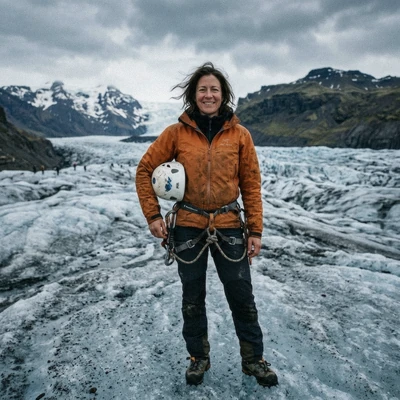
Is glacier hiking in Iceland safe? Guided, yes, genuinely: certified guides re-cut every route as Falljökull moves, issue crampons, helmet and harness, and rope up on the steeper icefall sections before anyone's feet leave firm ground. Unguided is a different question entirely, and it's the one Safetravel.is answers with a flat no. It isn't risk-free for everyone, either. Pregnancy, certain heart and back conditions, and real minimum ages by route are worth knowing before you book. Eleven seasons walking the Öræfajökull outlets is what this guide is built from, not marketing copy.
Quick answer
Glacier hiking at Skaftafell is genuinely very safe when guided: certified guides re-cut routes daily, issue crampons and helmets on every tour, and rope up on the steeper icefall sections. Unguided glacier travel is a real hazard, which is exactly why the free trail here ends at a warning sign short of the ice.
Key takeaways
- Guided routes are managed daily; unguided glacier travel is the genuine risk Safetravel.is warns against
- Every tour issues crampons, helmet and ice axe; harnesses come out on the steeper icefall sections
- Pregnancy and a few real minimum ages by route are the main exclusions, see the table below
- Wind and storms, not light rain, cancel departures; guides make the call, not the weather app
- Cold on the ice is a clothing problem, not a safety flaw, see our what-to-wear guide
- The full restrictions table below covers age, pregnancy, fitness and more, route by route
The Safety Record
No Icelandic authority publishes a tourism-specific fatality count for guided glacier hiking at Skaftafell, and I won't invent one to fill that gap. What can be said plainly: every guided tour leaving here walks a route re-cut and re-walked by a certified guide that same day, roped up where the icefall genuinely demands it, on ice that's inspected before a single client steps onto it. That's a structurally different activity from unguided glacier travel, which is where Iceland's search-and-rescue teams pull people off the ice every season.
The accidents that make the news in Iceland involving glaciers are overwhelmingly unguided incidents: hikers who walked past a warning sign, or ventured onto an outlet glacier without a guide, crampons, or a rope. That pattern is exactly why Safetravel.is, run by Icelandic Search and Rescue, states plainly that a glacier should never be walked without a certified guide or proper equipment, since crevasses, moulins and unstable ice roofs are not always visible from the surface and conditions change overnight. Guided operations here follow that rule as standard practice, not as an upsell.
Framed against everyday risk, a roped, guided walk on a tested line sits closer to a supervised outdoor activity than a wilderness expedition. The least-controlled variable on most days is the weather turning, not the ice itself, which is exactly why a guide's judgment about when to cut a route short matters more than any single piece of gear.
What Makes It Safer Here: Rules and Local Practice
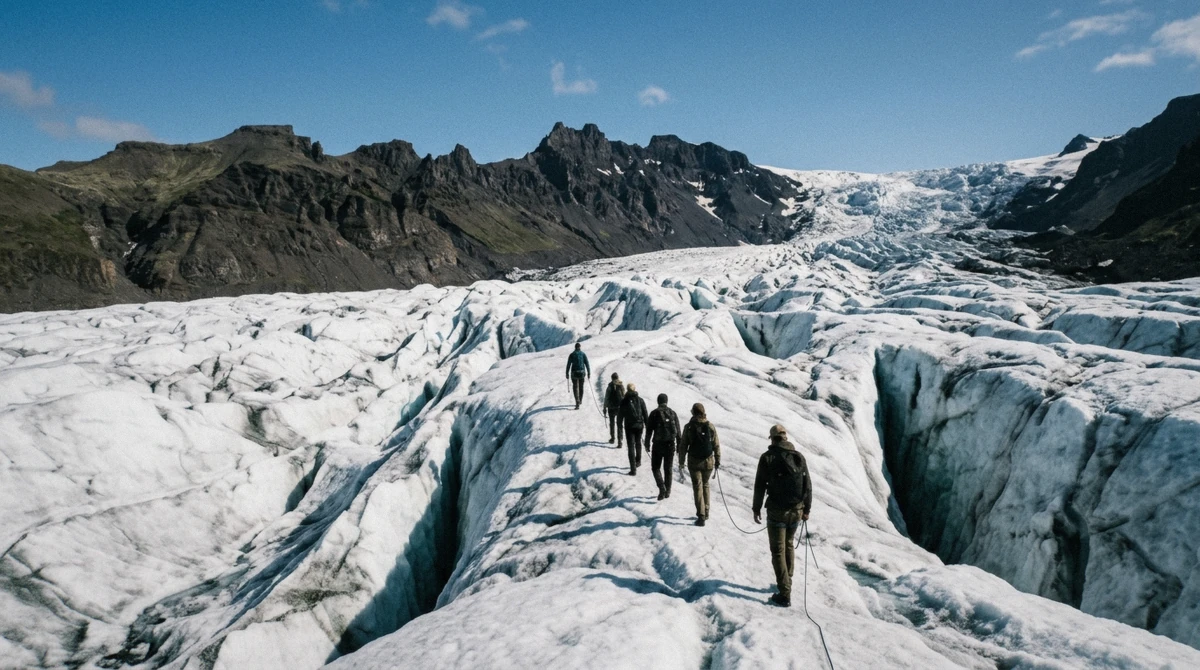
Guides on every Skaftafell route are certified and re-walk the day's line themselves before a group sets foot on the ice, since Falljökull's icefall shifts constantly and there is no fixed path that stays safe from one week to the next. That's also why the Long Adventure route (tour-6) has no fixed route at all: the guide reads the ice fresh each departure. On the steeper sections of the icefall, harnesses and ropes come out, standard on the Glacier Explorer, the XTreme, the half-day route and Beyond the Limit.
The go or no-go call on a given morning sits with the guide, not a weather app, and it's storms and high wind that ground a departure, not light rain, which is routine here and rarely stops a tour. Where regulation runs genuinely thin is in any independent third-party audit of a specific guide's route choice on a specific day, and I won't pretend otherwise. That's exactly why operator choice, not a park rule, ends up being the traveler's main safety lever, which is what the vetting section below is for.
The Real Risks and How Good Tours Manage Them
Four real risk mechanisms specific to glacier hiking, each paired with the mitigation a competent Skaftafell guide actually applies:
| Situation | What a good operator does | Warning sign |
|---|---|---|
| A crevasse or moulin hidden under a snow bridge, not visible from the surface | Guide walks the tested line first and keeps the group roped or single-file on any doubtful stretch | A guide letting the group spread out and wander near cracked ice |
| A moulin, a vertical meltwater shaft that pulls anything sliding toward it straight down with the water | The half-day and Long Adventure routes pass deep moulins with the guide setting the exact line past them | No clear instruction about where to stand near a moulin |
| Rockfall or unstable ice at the glacier's edge, where the ice meets loose scree | Guides route around active fall zones and keep the group moving through them rather than stopping to linger | A long stop directly under a loose rock face or crumbling ice edge |
| A sudden weather turn, wind picking up on an exposed icefall | Guide cuts the route short or turns the group back toward the meeting hut early | A guide pushing on into worsening wind instead of turning back |
Cold itself belongs on this list too, though it's less a glacier-specific risk than a clothing one: standing on the ice in a katabatic wind off the ice cap feels colder than the station numbers suggest, even on a mild July day. That's a packing question, not a safety flaw in the route, and our what-to-wear guide covers the layers that actually solve it.
Why You Never Walk Past the Warning Sign Alone
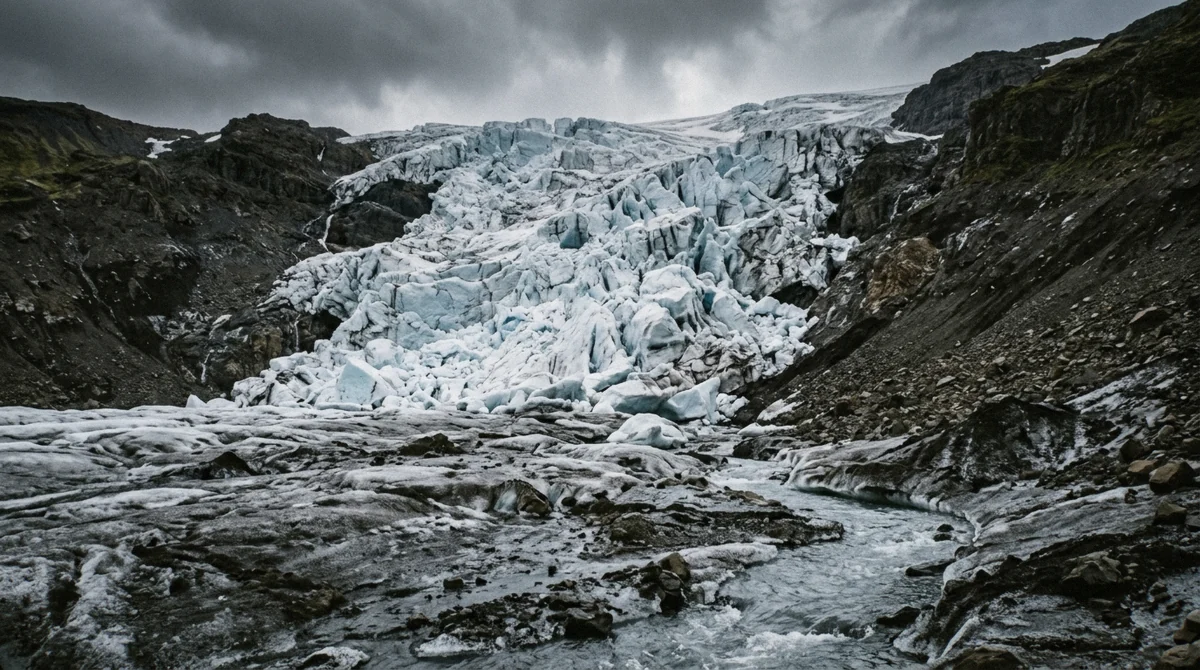
The free S1 trail from Skaftafellsstofa is a genuinely safe walk, 3.7 km round trip, easy grade, ending at a warning sign short of Skaftafellsjökull. It's safe precisely because it never touches the ice. Past that sign is where the crevasses, moulins and unstable ice roofs start, invisible from the surface and unpredictable overnight, and it's exactly the terrain Safetravel.is says never to enter without a certified guide.
Every guided tour on this site walks onto Falljökull instead, roped and equipped, with a guide who tested that day's line before the group arrived. The full comparison between the free trail and a guided walk lives on our homepage. If you do hike the park's marked trails unguided, leave a travel plan with Safetravel.is first; the visitor centre posts daily conditions year round.
Who Shouldn't Do It: Restrictions at a Glance
Every row below reflects a real, route-specific limit pulled from the operators' own listings, not an invented one.
| Restriction | Typical rule on Skaftafell tours | Why it exists | Ask before booking if... |
|---|---|---|---|
| Pregnancy | Generally advised against on all six routes | Uneven ice, roped sections and a real fall risk on the icefall | You're pregnant at any stage |
| Minimum age | 14 on the Glacier Explorer and XTreme, 12 on Beyond the Limit, 8 on the 3-hour beginner walk; the half-day and Long Adventure don't publish a figure, check the live listing before booking | Fitness, crampon fit and attention span on roped sections scale with age and route difficulty | You're booking for a child; our with-kids guide covers this route by route |
| Crampon shoe-size floor | Roughly EU size 34-35 | Crampons can't be strapped on securely below that size | You're booking a small-footed child or teen |
| Fitness for the climb | Standard routes involve roughly 200-250 metres of elevation gain over 3-7.5 hours | Sustained walking on uneven ice, plus standing cold, adds real exertion | You rarely do multi-hour hikes or have breathing concerns |
| Heart condition or high blood pressure | No formal exclusion, but a genuine consideration | Cold, exertion and altitude on the icefall can add cardiovascular strain | You have a diagnosed heart condition or uncontrolled blood pressure |
| Back problems or recent surgery | No formal exclusion, but uneven ice is a real jolt risk | Stepping between ice ridges and over crevasses jars the spine more than flat ground | You've had recent spinal or abdominal surgery |
| Mobility limitations | Not suitable; the terrain requires unassisted walking on crampons | There's no wheeled or assisted alternative on the ice itself | Standing and walking unassisted for 3+ hours is difficult for you |
| Intoxication | Not permitted on any tour | Guides need sober clients who can follow instructions instantly near a crevasse or moulin | You or a companion plan to drink before an early departure |
How to Choose the Right Route for Your Fitness
Route choice is the single biggest safety and comfort lever you actually control. The three-hour beginner walk runs at a genuinely gentle pace with no prior ice experience needed, the honest starting point for a first glacier hike or an unfit traveler who still wants real ice time. At the other end, the 7.5-hour Glacier XTreme is the hardest of the six physically and puts you on vertical walls with an axe in each hand; it's capped at six guests per guide precisely because that terrain demands closer supervision. Between those two, the five- and six-hour routes trade duration and terrain difficulty at a middle pace. If in doubt, book the shorter, gentler route: a guide can't make an unfit body fitter mid-hike, but an easy route on a strong day still delivers real ice time.
Be honest with yourself about your own fitness when you book, not just your enthusiasm. I'd rather turn someone back at the meeting hut for the gentler route than watch them struggle two hours into a program built for a fitter pace, and that conversation is far easier before departure than halfway up the icefall. For the two Arctic Adventures routes specifically, our operator review compares the Explorer and XTreme days side by side, and the ice climbing guide covers what those vertical walls ask of your arms.
Frequently Asked Questions
Is it safe to walk on a glacier without a guide at Skaftafell?
No. Safetravel.is, run by Icelandic Search and Rescue, states plainly that a glacier should never be walked without a certified guide or proper equipment. Crevasses, moulins and unstable ice roofs aren't always visible from the surface, and conditions change overnight. The free S1 trail stops at a warning sign for exactly this reason.
Can I glacier hike while pregnant?
Generally advised against on all six Skaftafell routes. Uneven ice, roped sections and a real fall risk make the icefall unsuitable during pregnancy at any stage.
What is the minimum age for a Skaftafell glacier hike?
It varies by route: 14 on the Glacier Explorer and XTreme, 12 on Beyond the Limit, and 8 on the 3-hour beginner walk. The half-day and Long Adventure routes don't publish a figure, so check the live listing before booking. Our with-kids guide covers the honest breakdown by route.
Do bad knees or back problems rule out a glacier hike?
No formal exclusion, but uneven ice genuinely jars the spine more than flat ground, so recent surgery or a serious back condition is worth a doctor's input first. The shorter, gentler beginner walk is the easier option if you're unsure.
Is winter glacier hiking more dangerous than summer?
Not inherently, when guided. Winter routes shorten and often reach small ice tunnels rather than getting riskier, though daylight drops to about 4-5 hours in late December, which compresses the schedule and worth planning around.
Can I walk on Skaftafellsjökull alone from the free trail?
No. The free S1 trail ends at a warning sign short of the glacier itself, and past that point is exactly the unguided terrain Safetravel.is warns against. Every guided route on this site walks Falljökull instead, roped and equipped.
What happens if the weather turns bad mid-hike?
The guide cuts the route short or turns the group back early. It's wind and storms that ground a departure, not light rain, which is routine here and rarely stops a tour. Our mistakes guide covers how to build a weather buffer into an itinerary.
Guided glacier hiking at Skaftafell is genuinely safe for most travelers, and genuinely not for everyone. Certified guides, daily re-cut routes, and real gear cover the mechanics. Pregnancy, the age floors by route, and a handful of medical considerations are worth knowing before you book, not after.
Choose a route that matches your fitness, not your ambition, and the rest of the day takes care of itself. The full Skaftafell glacier hike lineup compares all six by difficulty, price and meeting point.